A week on site: how a small crew keeps a budget honest

Let us follow an imaginary crew of six through one very normal week. They are not real customers, they are a stand-in for the kind of week most small teams would recognise.
The job is a kitchen refit. The budget is $24,300. The owner, Sam, has three people on site, one runner, and a bookkeeper who appears on Fridays and would like everyone to be kinder to her.
Monday: the small spend nobody mentions
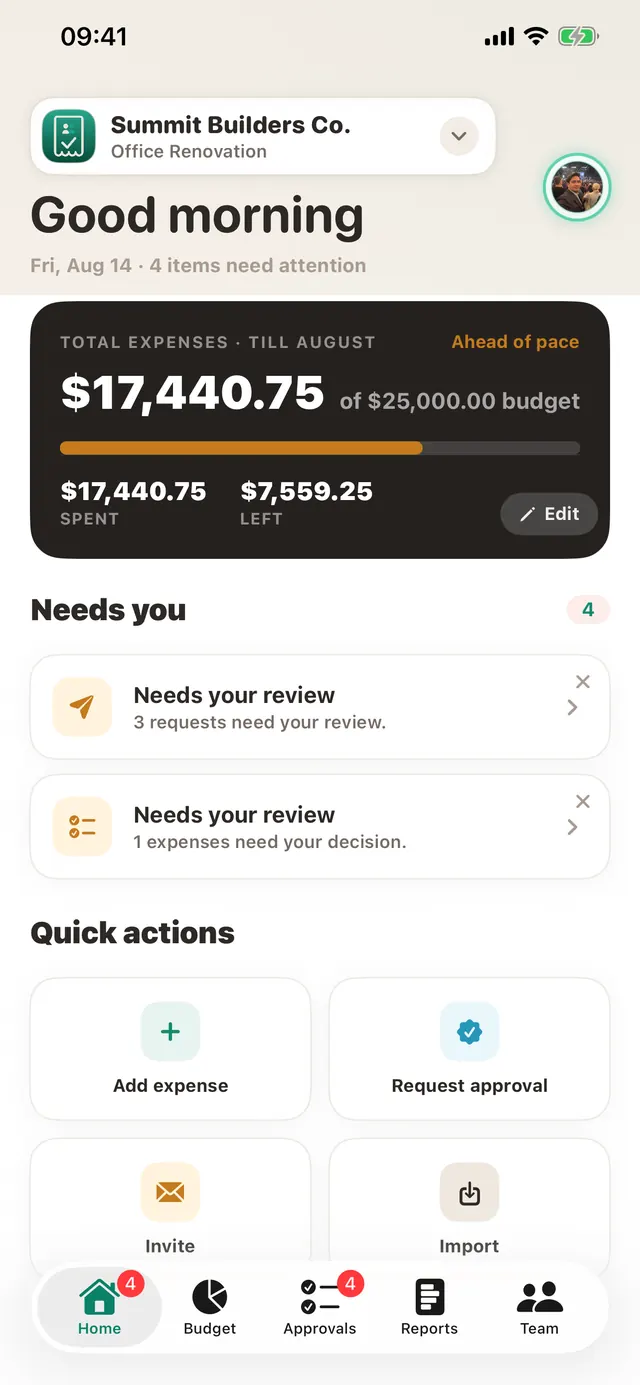
The runner buys $180 of fixings. In most weeks, that receipt lives in a pocket until Friday, and the budget quietly runs $180 hotter than anyone thinks. Here he photographs it in the car park. Ten seconds. Sam does not have to be told, because the number on her screen already moved.
Tuesday: the question that costs money
A tiler asks whether they can hire a bigger cutter for two days. $260.
This is the moment where budgets actually break, not in a spreadsheet, but in a conversation where nobody is quite sure who decides. So he sends the request from his phone with a photo and a note. Sam sees what is left in the tools line, taps approve, and work carries on. Nine minutes, start to finish.
Wednesday: someone drives a long way
The second fixer drives 140 miles to collect a part. Mileage and a day's per-diem get estimated up front and approved like anything else, so nobody discovers it as a surprise expense two weeks later.

Thursday: the honest moment
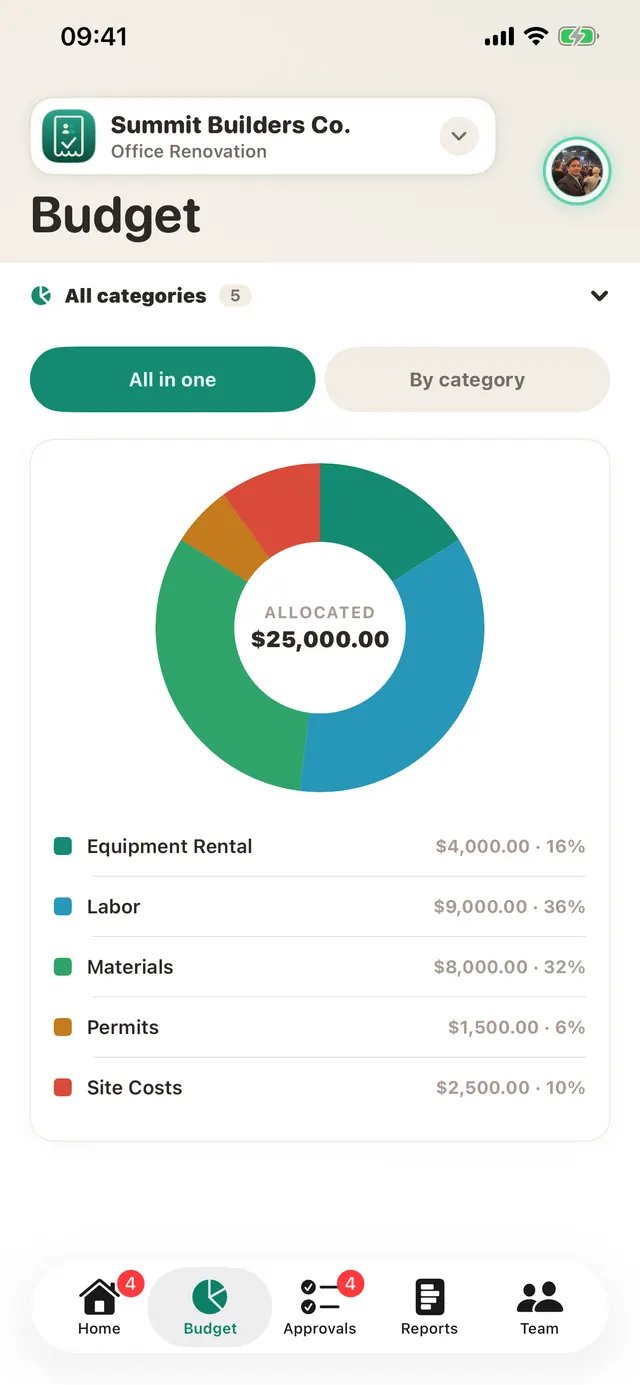
Materials go over their allocation. Sam gets an alert, not a cheerful "you are at 80%" nudge, but a plain message that this category is now over.
Knowing on Thursday is worth far more than knowing on the 30th. On Thursday you can still move something. On the 30th you can only write it down.
Friday: the bookkeeper has a nice day
Nothing is in a pocket. Every expense has a receipt attached and a project against it. She exports the report as a PDF, pushes the approved expenses across to the accounts, and leaves on time.
What actually changed
Not the work. The crew did the same job in the same week. What changed is that every small decision happened while it was still smalla ten-second photo, a nine-minute approval, an alert on Thursday rather than a shock on the 30th.
And everyone saw only what they needed to. The crew see their own rows. Sam sees the whole budget. Nobody had to be trusted with a spreadsheet they should not have had.
Try it on your next project
TaskSpend is free to start, one project, ten people, no card needed.
Get TaskSpend